
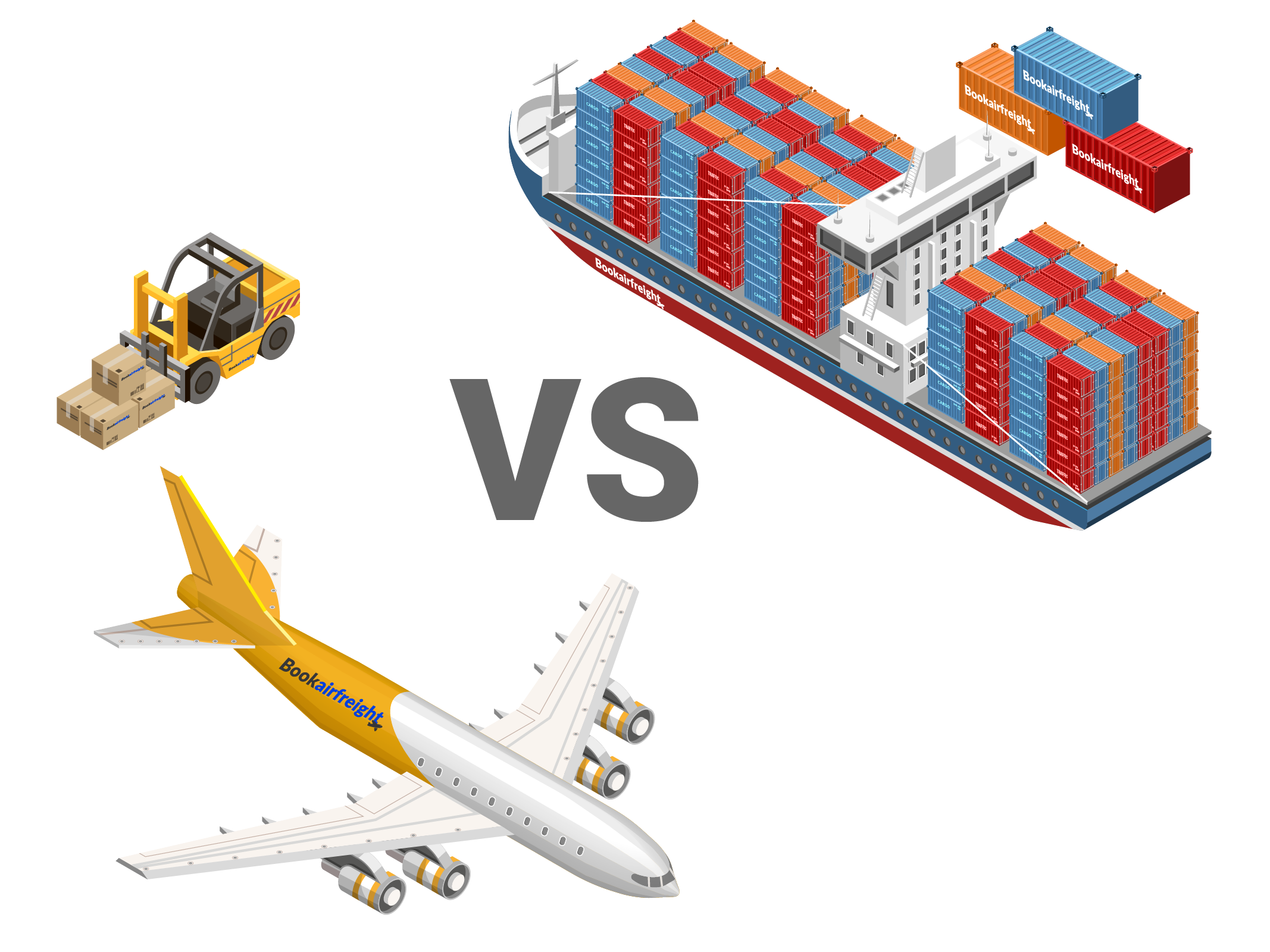
Air freight and sea freight can both support international cargo movements, but they serve different planning needs. The choice should take account of shipment characteristics, required timing, route availability, and the total cost of getting goods to their destination. Selecting the right mode of transport is one of the most consequential decisions in international supply chain management. Every commodity presents unique handling requirements, budgetary constraints, and delivery schedules. By systematically evaluating the operational differences between air and ocean transport, businesses can optimize their shipping schedules while maintaining control over overall landed costs.
Transit Profile
Air freight is often considered when a shorter transport segment is important and the cargo is accepted by the airline. It provides swift cross-border transit, making it the preferred option for urgent shipments, high-value electronics, seasonal inventory, or critical healthcare supplies.
Sea freight generally involves a longer transport cycle and may require additional time for port handling, consolidation, or container arrangements. Ocean transit operates on fixed vessel schedules and offers substantial capacity for bulk movements, though overall schedules are subject to port operations, vessel routing, and weather conditions. Door-to-door timing depends on the full route, customs clearance, and inland transport links, making realistic timeline planning essential regardless of the chosen mode.
Shipment Size and Rate Basis
Understanding how freight rates are calculated is vital when comparing transport methods. Air freight pricing commonly considers chargeable weight, which may reflect actual weight or dimensional weight according to the carrier’s rules. Volumetric calculations mean that light but bulky items can incur higher charges relative to their actual mass.
Sea freight pricing may depend on container type, shipment volume, weight, origin, and destination charges. Full Container Load (FCL) options offer flat-rate pricing per container, while Less than Container Load (LCL) shipments bill based on cubic meters or weight units. Requesting a clear breakdown of the rate basis and minimum chargeable thresholds ensures accurate financial comparison before booking.
Cargo Suitability
Not all commodities are accepted by all carriers or services. Regulatory guidelines, transport safety rules, and carrier policies dictate which goods can be moved by air or sea. Batteries, liquids, chemicals, perishables, high-value goods, medical equipment, and other specialised cargo may have additional restrictions, packaging standards, or documentation requirements.
Air transport enforces strict restrictions on hazardous materials, lithium batteries, and pressurized containers due to flight safety regulations. Sea freight offers broader scope for heavy machinery, vehicles, and hazardous goods, provided proper stowage and dangerous goods declarations are supplied. Always disclose full cargo specifications early to confirm carrier acceptance.
Total Landed Cost
Evaluating transport options requires looking beyond the main freight charge. Total landed cost encompasses every financial element needed to move goods from the origin facility to the final receiving warehouse.
Compare more than the main freight charge by including collection, export handling, documentation, destination handling, customs clearance, duties and taxes, storage, and final delivery where applicable. While air freight may carry a higher headline transport rate, it often reduces warehousing overheads and inventory holding costs. Conversely, sea freight significantly lowers unit shipping costs for high-volume cargo, though port terminal charges and potential storage fees must be factored into the final budget calculation.
Flexibility and Planning
Every business requirement involves balancing urgency against operational budget. Consider how urgent the shipment is, whether goods can be dispatched in stages, the availability of stock, the destination’s receiving capacity, and the consequences of delay.
A suitable choice is one that meets the actual business requirement within the available budget and operational constraints. In some instances, a hybrid strategy—shipping urgent initial stock by air freight while sending the primary inventory volume by sea freight—provides an optimal balance of speed and cost efficiency. Oritoke SkyLogistics can review eligible air and sea freight enquiries and explain the options available for the requested route. Final service selection and timing are confirmed in the written quotation.